





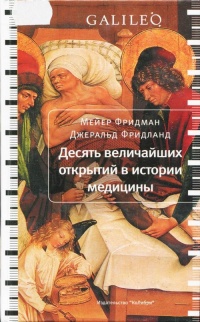
Открытия, которые изменили мир. Как 10 величайших открытий в медицине спасли миллионы жизней и изменили наше видение мира - Джон Кейжу
Книгу Открытия, которые изменили мир. Как 10 величайших открытий в медицине спасли миллионы жизней и изменили наше видение мира - Джон Кейжу читаем онлайн бесплатно и без регистрации! Читать онлайн вы можете не только на компьютере, но и на андроид (Android), iPhone и iPad. Наслаждайтесь!
210 0 22:15, 25-05-2019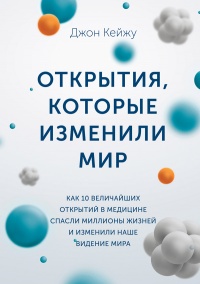
Книга Открытия, которые изменили мир. Как 10 величайших открытий в медицине спасли миллионы жизней и изменили наше видение мира - Джон Кейжу читать онлайн бесплатно без регистрации
Chater K. F. Streptomyces inside-out: A new perspective on the bacteria that provide us with antibiotics // Philosophical Transactions of the Royal Society, 2006. Vol. 361. Pp. 761–768.
Davies J. Microbes have the last word. European Molecular Biology Organization // EMBO Reports, 2007. Vol. 8. No. 7. Pp. 616–621.
Diggins F. W. E. The true history of the discovery of penicillin, with refutation of the misinformation in the literature // British Journal of Biomedical Science, 1999. Vol. 56. No. 2. Pp. 83–93.
Fleming A. The discovery of penicillin // British Medical Bulletin, 1944. Vol. 2. No. 1. Pp. 4–5.
Fleming A. Penicillin. Nobel Lecture, December 11, 1945 // http://nobelprize.org/nobel_prizes/medicine/laureates/1945/fleming-lecture.html.
Fleming A. Penicillin: Its Practical Application. Philadelphia: The Blakiston Company, 1946.
Fraser-Moodie W. Struggle against infection // Proceedings of the Royal Society of Medicine 1971. Vol. 64, January. Pp. 87–94.
Fridkin S. K., Hagerman J. C., Morrison M. et al. Methicillin-resistant Staphylococcus aureus disease in three communities // The New England Journal of Medicine, 2005. Vol. 352, April 7. Pp. 1436–1444.
Grossman C. M. The first use of penicillin in the United States // Annals of Internal Medicine, 2008. Vol. 149. Pp. 135–136.
Hare R. New light on the history of penicillin // Medical History, 1982. Vol. 26. Pp. 1–24.
Henderson J. W. The yellow brick road to penicillin: A story of serendipity // Mayo Clinic Proceedings, 1997. Vol. 72. Pp. 683–687.
Hobby G. L. Microbiology in relation to antibiotics // Journal of the History of Medicine and Allied Sciences, 1951. Vol. VI, Summer. Pp. 369–387.
Hopwood D. A. Forty years of genetics with Streptomyces: From in vivo through in vitro to in silico // Microbiology, 1999. Vol. 145. Pp. 2183–2202.
Kingston W. Antibiotics, invention, and innovation // Research Policy, 2000. Vol. 29. No. 6, June. Pp. 679–710.
Moellering R. C., Jr. Past, present, and future of antimicrobial agents // The American Journal of Medicine, 1995. Vol. 99 (suppl 6A), December 29. Pp. 11S-18S.
Murray J. F. A century of tuberculosis // American Journal of Respiratory and Critical Care Medicine, 2004. Vol. 169. Pp. 1181–1186.
Mycek M. J., Harvey R. A., Champe P. C. et al., eds. Lippincott’s Illustrated Reviews: Pharmacology, 2nd ed. Philadelphia: Lippincott Williams & Wilkins, 2000.
Naseri I., Jerris R. C., Sobol S. E. Nationwide trends in pediatric Staphylococcus aureus head and neck infections // Archives of Otolaryngology — Head & Neck Surgery, 2009. Vol. 135. No. 1. January. Pp. 14–16.
Nobelprize.org. Gerhard Domagk: The Nobel Prize in Physiology or Medicine, 1939 // http://nobelprize.org/nobel_prizes/medicine/laureates/1939/domagk-bio.html.
Nobelprize.org. Selman A. Waksman: The Nobel Prize in Physiology or Medicine, 1952 // http://nobelprize.org/nobel_prizes/medicine/laureates/1952/waksman-bio.html.
Nobelprize.org. Sir Albert Fleming, Ernst Boris Chain, and Sir Howard Walter Florey: The Nobel Prize in Physiology or Medicine, 1945 // http://nobelprize.org/nobel_prizes/medicine/laureates/1945/index.html.
Noble W. C. The sulphonamides: An early British perspective // Journal of Antimicrobial Chemotherapy, 1986. Vol. 17. Pp. 690–693.
Otten H. Domagk and the development of the sulphonamides // Journal of Antimicrobial Chemotherapy, 1986. Vol. 17. Pp. 689–690.
Peláez F. The historical delivery of antibiotics from microbial natural products — Can history repeat? // Biochemical Pharmacology, 2006. Vol. 71. No. 7, March 30. Pp. 981–990.
Penicillin in action // The Lancet, 1941. August. Pp. 191–192.
Penicillin in America // The Lancet, 1943. July. P. 106.
Saxon W. Anne Miller, 90, first patient who was saved by penicillin // The New York Times, 1999. June 9.
Wainwright M., Swan H. T. C. G. Paine and the earliest surviving clinical records of penicillin therapy // Medical History, 1986. Vol. 30. Pp. 42–56.
Wainwright M. The history of the therapeutic use of crude penicillin // Medical History, 1987. Vol. 31. Pp. 41–50.
Wainwright M. Moulds in ancient and more recent medicine, 2006. January 20 // http://www.davidmoore.org.uk/Assets/fungi4schools/Reprints/Mycologist_articles/Post-16/Medical/V03pp021-023folk_medicine.pdf.
Waksman S. A. Streptomycin: Background, isolation, properties, and utilization. Nobel Lecture, 1952. December 12 // http://nobelprize.org/nobel_prizes/medicine/laureates/1952/waksman-lecture.html.
Waksman S., Schullian D. M., eds. History of the word «antibiotic» // Journal of the History of Medicine and Allied Sciences, 1973. July. Pp. 284–286.
Watve M. G., Tickoo R., Jog M. M., Bhole B. D. How many antibiotics are produced by the genus Streptomyces? // Archives of Microbiology, 2001. Vol. 176. Pp. 386–390.
Wennergren G. One sometimes finds what one is not looking for (Sir Alexander Fleming): The most important medical discovery of the 20th century // Acta Paediatrica, 2007. Vol. 96. Pp. 141–144.
Wiedemann H. R. Gerhard Domagk // European Journal of Pediatric, 1990. Vol. 149. P. 379.
Williams D. E. Patsy’s Cure. Сайт Американского торакального общества // www.thoracic.org/sections/about-ats/centennial/vignettes/articles/vignette4.html.
Глава 8
Avery O. T., MacLeod C. M., McCarty M. Studies on the chemical nature of the substance inducing transformation of pneumococcal types // The Journal of Experimental Medicine, 1944. Vol. 79. No. 2, February 1. Pp. 137–158.
Brush S. G. Nettie M. Stevens and the discovery of sex determination by chromosomes // Isis, 1978. Vol. 69. No. 247, June. Pp. 163–172.
Crow E. W., Crow J. F. 100 years ago: Walter Sutton and the chromosome theory of heredity // Genetics, 2002. Vol. 160, January. Pp. 1–4.
Dahm R. Friedrich Miescher and the discovery of DNA // Developmental Biology, 2005. Vol. 278. No. 2. Pp. 274–288.
Dahm R. Discovering DNA: Friedrich Miescher and the early years of nucleic acid research // Human Genetics, 2008. Vol. 122. Pp. 565–581.
Dunn L. C. Mendel, his work and his place in history // Proceedings of the American Philosophical Society, 1965. Vol. 109. No. 4, August. Pp. 189–198.
Fairbanks D. J. A century of genetics // USDA Forest Service Proceedings, 2001. Vol. RMRS-P-21. Pp. 42–46.
Feinberg A. P. Epigenetics at the epicenter of modern medicine // Journal of the American Medical Association, 2008. Vol. 299. No. 11, March 19. Pp. 1345–1350.
Fuller W. Who said «helix»? Right and wrong in the story of how the structure of DNA was discovered // Nature, 2003. Vol. 424, August 21. Pp. 876–878.
Прочитали книгу? Предлагаем вам поделится своим впечатлением! Ваш отзыв будет полезен читателям, которые еще только собираются познакомиться с произведением.
Уважаемые читатели, слушатели и просто посетители нашей библиотеки! Просим Вас придерживаться определенных правил при комментировании литературных произведений.
Просьба отказаться от дискриминационных высказываний. Мы защищаем право наших читателей свободно выражать свою точку зрения. Вместе с тем мы не терпим агрессии. На сайте запрещено оставлять комментарий, который содержит унизительные высказывания или призывы к насилию по отношению к отдельным лицам или группам людей на основании их расы, этнического происхождения, вероисповедания, недееспособности, пола, возраста, статуса ветерана, касты или сексуальной ориентации. Просьба отказаться от оскорблений, угроз и запугиваний. Просьба отказаться от нецензурной лексики. Просьба вести себя максимально корректно как по отношению к авторам, так и по отношению к другим читателям и их комментариям.
Надеемся на Ваше понимание и благоразумие. С уважением, администратор My-Books.me.
Оставить комментарий
-
 Александра15 январь 09:37
Очень интересная книга! Особенно, если любишь психологию и хочешь понимать себя и других. Обязательно послушаю до конца. Спасибо....
Кригер Борис – Гнев
Александра15 январь 09:37
Очень интересная книга! Особенно, если любишь психологию и хочешь понимать себя и других. Обязательно послушаю до конца. Спасибо....
Кригер Борис – Гнев
-
Галина25 май 13:02
Очень уважаю Артема Шейнина, книга замечательная, очень мне близкая по духу.Перечитываю уже второй раз, столько пережитого и не...
Мне повезло вернуться - Артем Шейнин
-
Екатерина11 январь 08:05
Доброе утро. Подскажите пожалуйста как сохранять книги, ставить закладки?...
Подонок - Анастасия Леманн